
Becoming a Teacher Later in Life: Everything You Need to Know
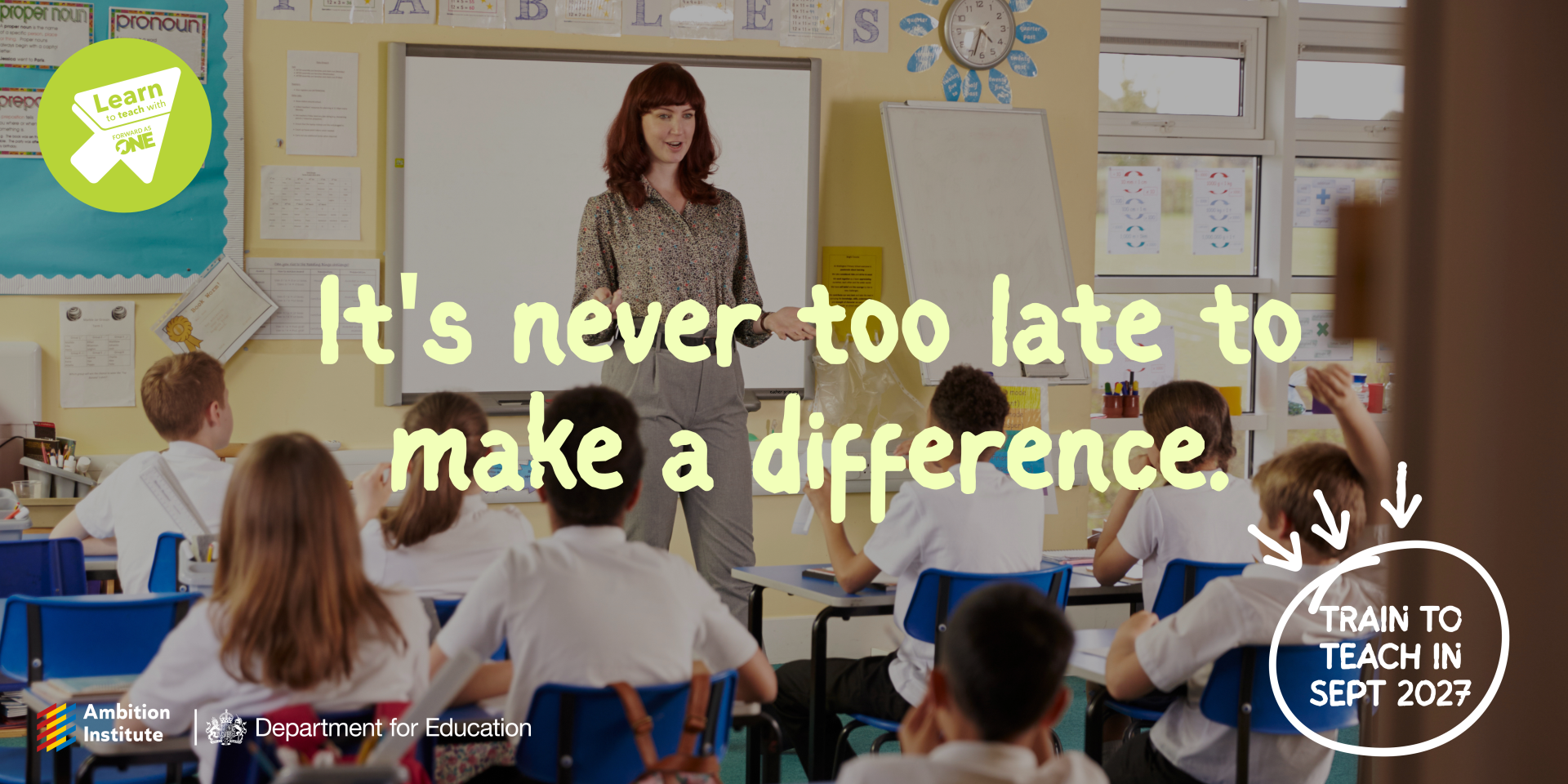
If you’ve ever thought about becoming a teacher but dismissed the idea because of your age, you’re certainly not alone.
Many people feel like they have left changing careers too late in life, but this is simply not the case. Every year, people from a wide range of ages retrain to become teachers, including those in their 30s, 40s, 50s and older.
In this guide, we’ll discuss what benefits you can bring to the education sector, as well as the qualifications you’ll need to apply for a teacher training course.
Apply for teacher training today!
Am I too old to become a teacher?
No, there is no upper age limit to becoming a teacher.
Provided you meet the entry requirements for the teacher training programme, your age will not be a barrier. In fact, many schools value the skills and life experience that older trainees bring to the profession.
Many teachers begin their teaching journey after having a career in a different sector, such as:
- Business and finance
- Retail and hospitality
- Healthcare
- Customer service
- Administration
- The armed forces
Why do people change careers to teaching?
For many career changers, teaching offers something that might be missing from their current role. Oftentimes, this is a sense of purpose and belonging.
While everyone’s reasons for becoming a teacher are different, some common motivations include:
- Making a difference: Teaching provides the opportunity to positively influence the lives of young people, helping them develop both academically and socially.
- A more meaningful career: Many career changers are looking for work that feels rewarding and allows them to positively contribute to their local community.
- Using existing skills in a new way: The skills you build in previous job roles don’t just disappear when you change careers. In fact, they can become valuable assets that help you thrive in the teaching profession.
- Develop new, different skills: Teaching is a career built around continual learning and development. Right from the get-go in your teacher training journey, there are many ways to continue growing professionally.
What are the benefits of changing careers to teaching?
Changing careers can feel like a big step, but it can also be an exciting opportunity to pursue a profession that offers both personal and professional development.
Listed below are some of the benefits of changing career to teaching.
Enjoy a career with purpose
Many of us want to work in an industry that has purpose, which is why career changers make the move to teaching.
Teaching is much more than just delivering a lesson on maths or English. Every lesson you teach, and every interaction you have, will help to inspire the next generation and help them to reach their full potential.
Become part of a school community
Schools are unique environments where staff work closely together to support their children, families and the local community.
As a teacher, you will become part of a wider school community, building strong relationships with a variety of different people which can help to create a strong sense of belonging.
Strong career progression opportunities
Teaching offers a wide range of opportunities for professional development and progression.
As your career develops, there are a number of different areas you could choose to specialise in, including SEND, subject leadership or pastoral support. You can also progress into senior roles within a school or a wider educational leadership position.
School holidays and work-life balance opportunities
While teaching is undoubtedly a busy profession, many people are attracted to the profession so they can spend school holidays with their families.
The school calendar can offer greater flexibility than some careers, particularly for those with children of their own. For those who are looking for better balance between their personal and professional lives, this can be an appealing aspect of the role.
No two days are the same
Teaching can be an extremely varied role, with no two days being the same.
If your current role is starting to feel repetitive, teaching can bring new experiences, challenges and successes all within one week. For many people looking to change careers, this variety is a welcome change from roles that may have become predictable.
What qualifications do I need to teach?
No matter what age you are, there are still certain entry requirements that need to be met.
This will usually include:
- GCSE English, Maths and Science at grade 4/C or higher
- A bachelor’s degree of 2:2 or higher
- Right to work in the UK
If you’re unsure whether your qualifications are suitable, or you are missing certain qualifications, it’s always worth speaking with our team before ruling yourself out.
Will I be training alongside younger graduates?
Many people considering teacher training later in life worry they won’t fit with younger trainees, but this simply isn’t the case.
We receive applications from a variety of different age groups, from young graduates fresh out of university to those who have had an established career for several years and are looking for change.
Our common applicants include:
- Recent university graduates
- Teaching assistants of all ages
- Career changers
- Parents returning to work
- Professionals with many years of industry experience

What does teacher training involve?
Our teacher training programme combines practical classroom experience with professional development studies.
During your training, you will:
- Gain experience in several different school settings
- Observe experienced teachers
- Develop teaching practice
- Learn about curriculum and assessment
- Build behaviour management skills
- Receive mentoring and feedback
- Work towards Qualified Teacher Status (QTS)
Is changing careers to teaching worth it?
It is ultimately up to you to decide whether teaching is the right career for you. However, many teachers who join the profession later in life describe it as one of the most rewarding decisions they’ve made.
Teaching offers the opportunity to make a genuine difference, continue to develop professionally and work within a supportive profession.
If you’ve been thinking about becoming a teacher, it might be worth exploring your options rather than assuming you’ve missed your chance.
Frequently asked questions:
Can I become a teacher at 30/40/50?
Yes, many people begin their teaching career in their 30s, 40s, 50s and beyond!
Many schools value the experience, maturity and transferable skills that career changers bring to the profession.
Do career changers make good teachers?
Yes, career changers often make great teachers thanks to their different life experiences.
Career changers bring valuable professional experience, subject knowledge and communication skills that can really help to springboard their development as teachers.
What funding options are available to me?
The funding options that are available to you will depend on your specific circumstances.
Thankfully, the DfE have made a handy guide on the different funding and support available.
Ready for your next chapter?
If you’re ready to step into a new career, teacher training could be the opportunity you’ve been looking for.
Your future starts in the classroom.